
How to stop sounding insufferable
A guide to improving Millennial dialog

Recently,
wrote an excellent essay On Millennial Snot which went into depth regarding the catty, passive-aggressive, and perpetually pubescent way in which Millennial professionals speak and engage with others. This was a deadly-accurate piece, and put to words what most of us have doubtlessly encountered online, in our personal lives, or professionally (especially if you have worked in the corporate world); the catty, sarcastic, and condescending manner of speaking these people have adopted is positively insufferable.Mr. Newright provides some great analysis as to why this type of tone and tenor is struck without hesitation by this demographic, and I must agree with his assessment. At the core seems to be an inability to age gracefully, and a paralyzing fear of falling “out of touch” as they perceive their boomer parents to have always been.
If I act forever 21, I will feel forever 21 and the youth of today will look at me and be like ‘you know, that old guy over there is alright. He just gets it.’
This explanation would also make strides in understanding the infantilization of people now in their forties, but that is a topic for another day.
It is as if many of these types have never escaped their desire to be seen as “cool” by their peers. I confess, when I was in my teens I desired that possibility more than anything else, but I knew deep down that this tantalizing goal would always be just outside of my grasp, and eventually outgrew it. I fear we live in a world filled with these youngish to middle-aged professionals who have not shed that desire, and they continue to desire the approval of their peers or anonymous onlookers online. Hence the insatiable avarice for “imaginary internet points” such as likes or karma (does anyone use Reddit anymore?), which can be cheaply mined using techniques such as snappy clapbacks and “dunks”.
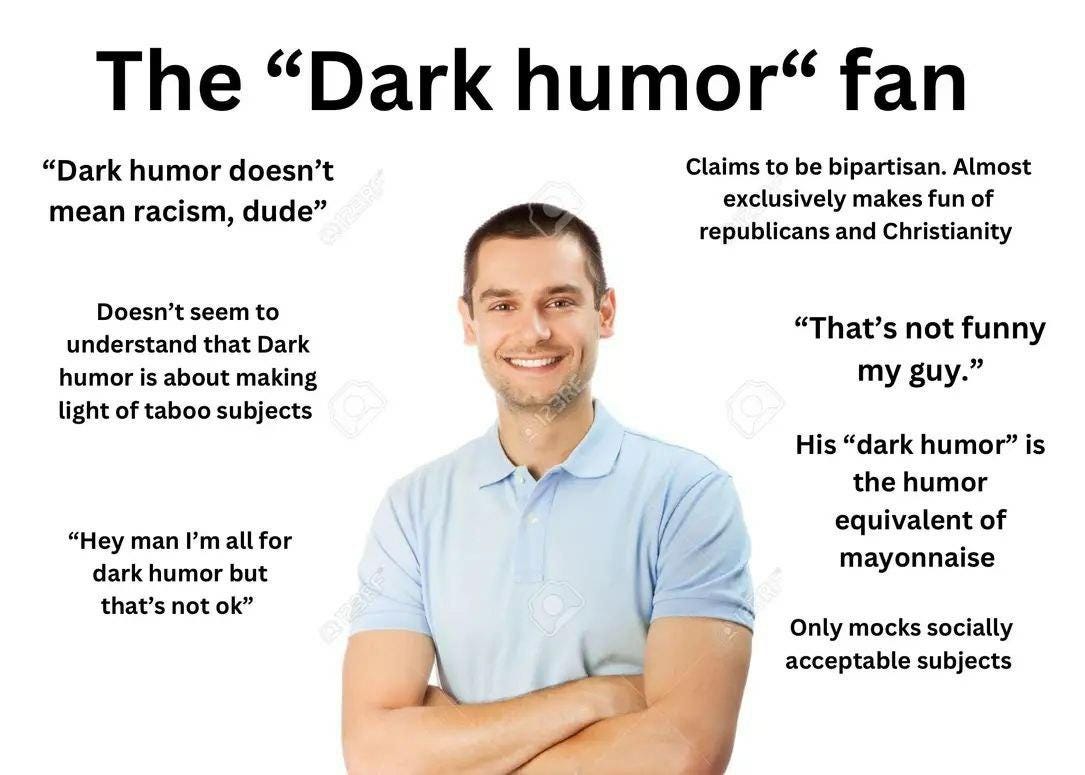
We also see this in the casual use of profanity, and the prevalence of so-called “dark humour”.
Hah! I will display how ‘with it’ I still am by putting a swear word in my book title! That way people will know that I have the guts to speak truth to power, but that I can also let loose and present it like I’m a cool guy!
Examples of this phenomenon can be found at an airport bookstore near you.


So as a humble propagandist, I am going to try to present some short, brief, easy-to-apply alternatives to common verbiage utilized by these types. If you have someone in your life suffering from this affliction, try to deliberately (perhaps, obnoxiously) counter signal with some of the alternate language choices presented here. Social pressure can be just as powerful a tool for good as it can be for ill, and this demographic is particularly susceptible- despite believing that they are a collective of individual thinkers.
Problematic
Instead of saying “X is problematic”, try saying “I really don’t like X.” The neologism “problematic” is sneaky in the power it wields. Instead of saying “this particular thing bothers me, and I don’t want to engage with it”, the use of the word problematic says “there is something wrong with this thing and that should be addressed so I don’t have to engage with it.” It moves the responsibility from the observer to the thing itself, and assigns a negative quality to it instead of vocalizing a negative perspective of it. The real danger lies in that the repeated use of this term will cause others to echo it, and in the subconscious of the collective the mob will internalize that yes, there is something wrong with this thing, and it shouldn’t be allowed to exist in polite society.
Douche-Canoe (or other compound expletives used for creative name-calling)
Instead of calling someone you don’t like a “douche-canoe” (or other compound curse that combines a Class 3 curse word with a mundane term), just call them an asshole. I do believe that cursing in public, especially in front of children and women, degrades the fabric of our society, and it is something that has really gotten away from us in our culture. But I get that sometimes that car almost hit you while you were crossing the crosswalk, or you pinched your finger in the door frame moving that couch (every damn time…). In these scenarios, simpler is better. Quit trying to be zany and cute when your intent is to embarrass someone by calling them a name. Just be direct.
My guy/My Dude
Another insidious one here. Instead of beginning a scathing criticism or vitriolic rant with “my guy”, just get to the point. You are already addressing this person if you are beginning your screed this way, starting with “my dude” is unnecessary. However, the effect it does have is the linguistic/typed equivalent of physically breaching someone’s personal space.
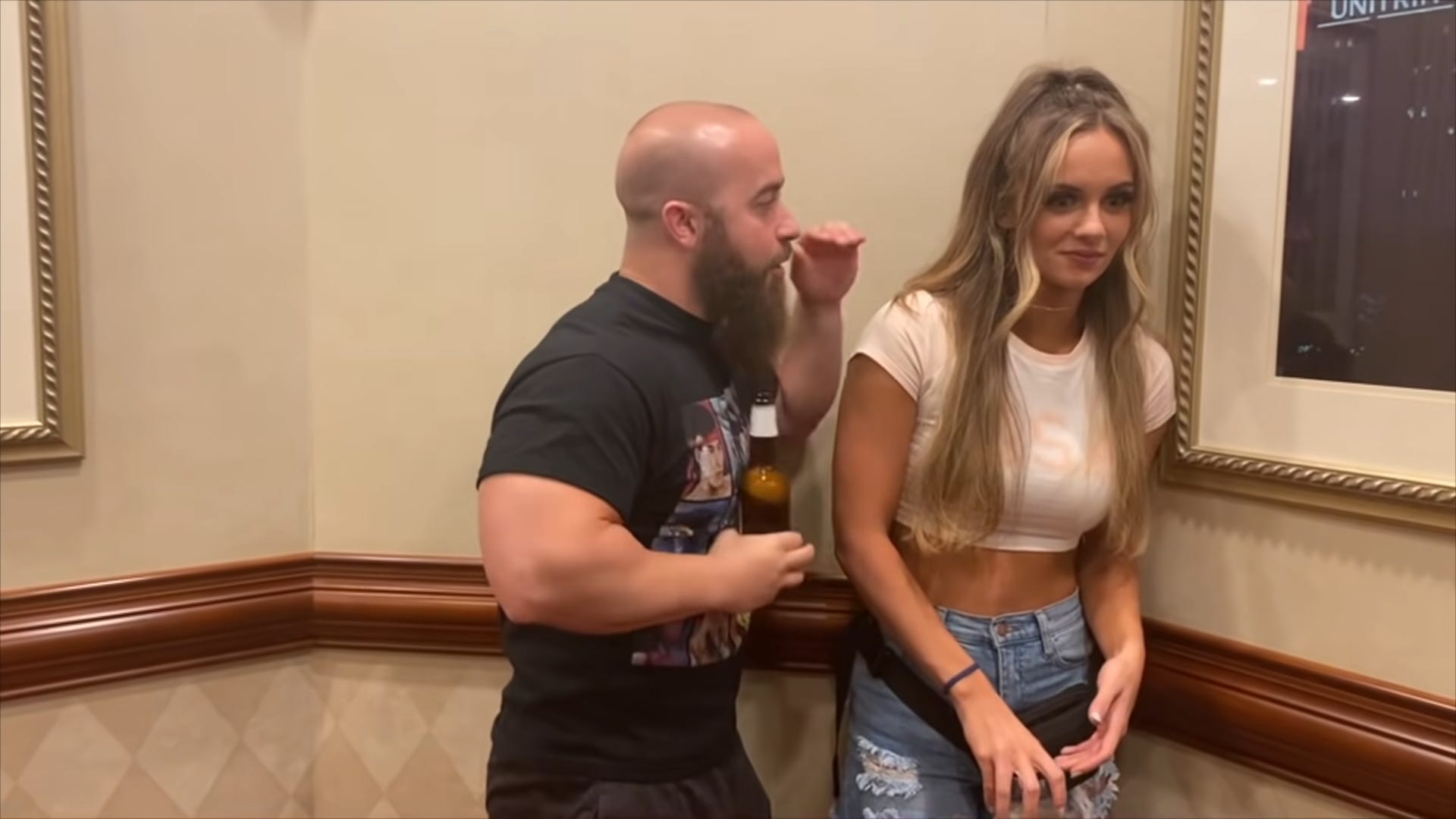
Personal space (or the Reaction Gap) is an important region of space because when two people are here together, the first one to make a violent attack will almost certainly land the blow (barring poor execution or incredibly fast reflexes). This knowledge is encoded in our brains, so we reserve this piece of precious real-estate for friends and loved ones. When someone physically walks into this space to close-talk with you, they are forcing their way into an intimate place and we feel a sense of invasion while they get a sense of domination. Addressing a stranger or a rival with “my guy” is a way to virtually invade personal space, and making sure all the witnesses to your verbal duelling know that you are taking the dominating position, while also giving the plausible deniability of saying “I was just trying to be friendly to ease the tension.” Give me a break. You’re being a bitch. Stop it.1
I hate everyone equally
Instead of expression universal contempt, just specify the person or group to whom you wish to direct your ire! This is another edgy phrase used by the “dark humour” fans addressed above. Out of a fear they will be accused of prejudice, or some type of other “ism” or “phobia”, these people will disguise their disgust at a category of person who has (likely) repeatedly wronged them by addressing all of humanity. No one is buying the universal misanthropy, but it gives a sneaky back door to bail out of accusations of any type of discrimination. This dovetails nicely into…
We need a new plague
Speaking of universal misanthropy, this saying expresses a desire to see fewer humans on the planet. You’d think after the years of 2020-2022, this expression would have fallen completely out of favour. And yet, if you listen closely you can still hear these words uttered. This sentiment likely comes from “main character syndrome”, where the speaker believes that even if there was a plague on the scale of the Black Death, they would emerge unharmed with plenty more available real estate in light of 4their deceased neighbours. Instead of saying “we need a new plague” try saying “this is the type of person I really don’t want to have around me.” Direct, to the point, no ambiguity, and you aren’t silently praying for the deaths of millions of people.
That just happened
We know. We saw it happen.
This expression is often used to diffuse tension after an uncomfortable outburst or demonstration of beliefs. Essentially, when someone breaks the social norms, and the perception of order needs to be restored, this phrase can be deployed to regard the outburst as an unwelcome anomaly, so all present can move on without addressing the subject itself. Instead of saying this, just try… not saying anything at all. Just move on with whatever it is you’re trying to do if you don’t have the time to address the claims themselves. Often, less is more.
Adulting
This has to be among my least favourite of the millennial neologisms. It is a new verb inventing to denote “operating in the real worlds like a functional human being” and encapsulates things such as waking up on time, going to work, making and fulfilling appointments, and the like. In days gone by, a term would be used to describe the operation of someone who appeared incapable of functioning properly. However for whatever reason- perhaps the competency crisis, childhood stretching out into the fourth decade of life, or an overall fear of responsibility- we have flipped the script and instead must use a term to describe when someone can handle normal functionality well. Instead of saying you are “adulting”, just fulfill your damn responsibilities and don’t draw attention to it.
Unending sarcasm and irony
I will close up with this one, which I think is the root or heart of many of the above phrases. Despite claims millennials tend to make about seeking “authenticity” or being “true to themselves,” there appears to be a very real fear of truly embracing authenticity. Perhaps it is a fear of abandonment or rejection that is all too common. Or maybe it stems from experience of being mocked by peers or loved ones when a true sentiment was expressed. Whatever the root cause, irony and sarcasm is deployed like a force field, to provide some type of cushioning and protection for the authentic self against whatever mockery would come for exposing one’s true belief or expression. It is a sad thing, but the result is a loss of truthful and genuine discussion and expression of ideas. Not to mention how grating and catty it all sounds. I propose that when you are tempting to make a sarcastic remark or use irony to cloud the truth behind your words, just don’t. Embrace true authenticity, and say what you mean the way you mean it. This will become easier with time.
I hope I have presented some useful alternatives, and put words to why many of these expressions grate on our sensibilities. I know that by putting these ideas on paper, it has caused me to reflect on the linguistic tendencies I have, and which insufferable blunders I make accidentally. If I can leave with with a summary of this article, and the true meaning at the heart of it, it this: Say what you mean, and mean what you say. Human language is a miracle and a gift, it is meant to be used to express ideas, dialog and argue, and to inch our way one step at a time towards the truth. Do not be afraid to be authentic, and do not allow the harsh judgment of others to prevent you from expressing what you believe.
I admit, until I made the connection between this phrase and the invasion of personal space I used this one a lot. I am contrite, I have repented.